
As solar energy is set to become one of the world’s primary power sources, a key challenge is ensuring that the overall power system remains stable and secure at all times.
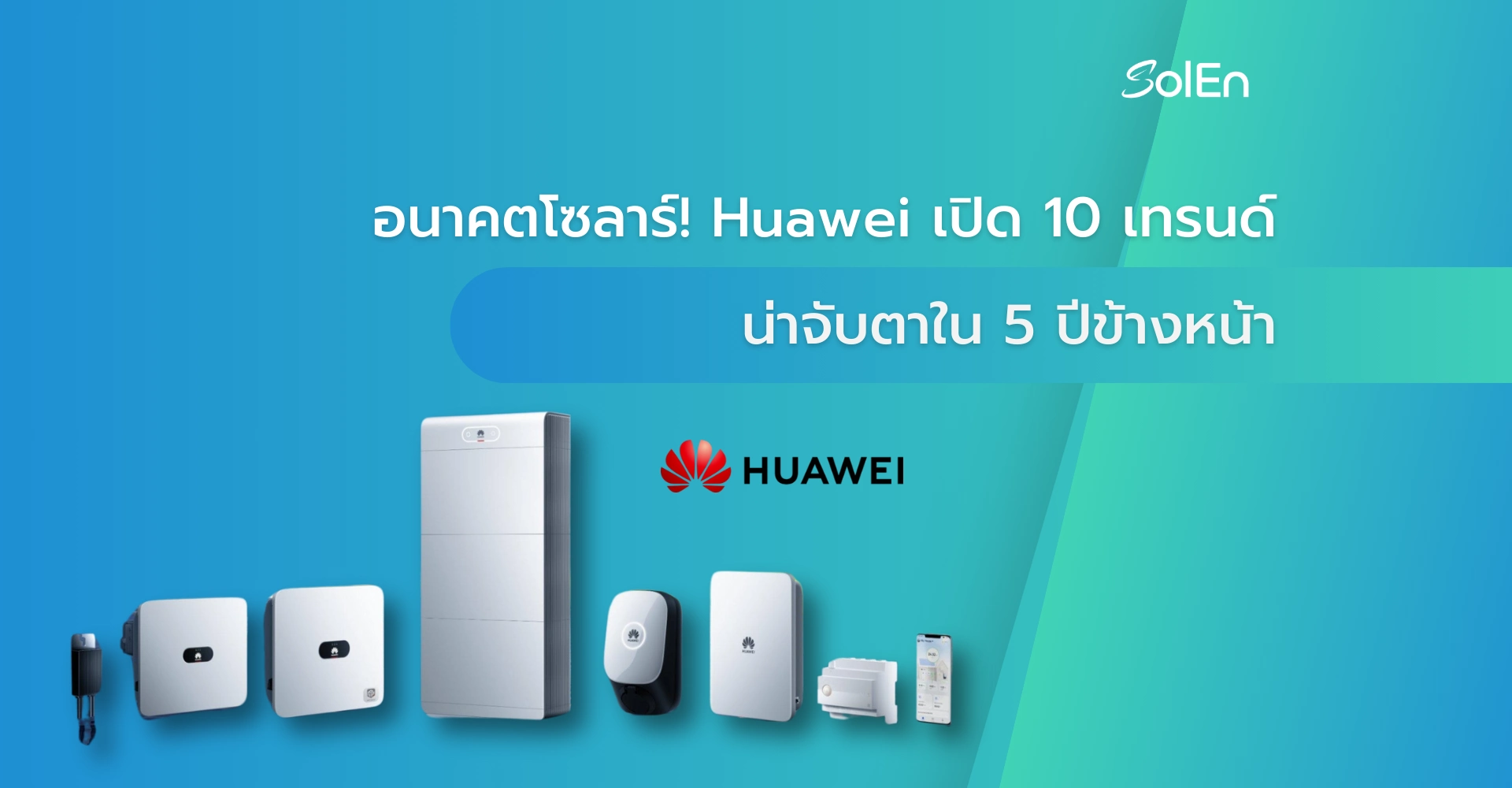
Huawei is therefore leveraging intelligent technologies such as AI and cloud computing to analyze and forecast 10 major trends for 2025 that will drive the solar industry toward lower costs, greater grid compatibility, and the highest levels of safety and reliability.
Trend 1: The Transition to Digitalization
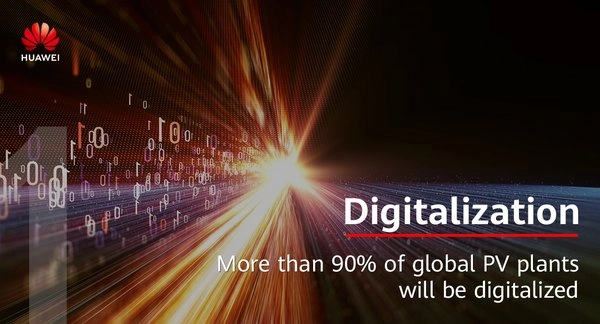
Key Point: Over 90% of solar power plants worldwide will transition to digital systems.
In the past, many solar power plants have continued to rely on outdated tools and management systems, which are often inefficient and prone to data inaccuracies. However, as digital technologies such as 5G and cloud computing advance rapidly, it is projected that by 2025, more than 90% of solar power plants worldwide will be fully upgraded to digital systems.
This transformation will enable smarter plant management, more accurate data monitoring, and significantly improved operational efficiency.
Trend 2: Elevating Intelligence with AI

Key Point: Over 70% of solar power plants will adopt AI technology.
AI (Artificial Intelligence) technology is becoming a key enabler for solar energy systems, helping to address the increasing complexity of operations and maintenance.
AI can perform several core functions: it can “detect” equipment abnormalities automatically, “optimize” panel positioning to maximize energy generation, and “manage” battery storage and energy dispatch to achieve the highest possible profitability.
Therefore, even though the cost of generating electricity from solar panels is decreasing, the increasing system complexity makes AI a technology that more operators will adopt in the future.
Trend 3: Unmanned Solar Power Plants

Key Point: Over 80% of tasks in solar power plants will no longer require human involvement.
AI and IoT (Internet of Things) technologies will transform solar power plant operations and maintenance through a clear division of roles.
AI will be responsible for **“thinking, analyzing, and making decisions,”** learning from expert data to optimize system performance. Meanwhile, drones and robots will handle **field operations** that are dangerous, repetitive, or require high precision.
This well-balanced collaboration will enhance both efficiency and safety. Huawei therefore predicts that future solar power plants may operate entirely autonomously, without the need for human intervention.
Trend 4: Fully Supporting Power Plant Operations
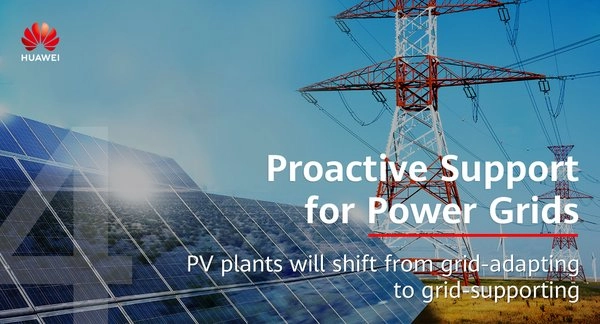
Key Point: Solar power plants will shift their role from “adapting to the power grid” to “actively supporting the power grid.”
As large amounts of renewable energy such as solar power are connected to the grid, it can potentially affect overall grid stability.
Therefore, over the next five years, solar power plants will need to evolve from being merely **“electricity producers”** to becoming **“grid stability supporters,”** helping maintain balance within the power system.
The key device that makes this possible is the **inverter**, which must have four advanced capabilities:
* The ability to operate reliably in weak grid conditions
* The ability to generate clean power signals free from interference
* Resistance to voltage fluctuations (both under-voltage and over-voltage)
* The capability to help maintain stable grid frequency
All of these features are essential for ensuring the stability of future power grids.
Trend 5: Solar + Energy Storage
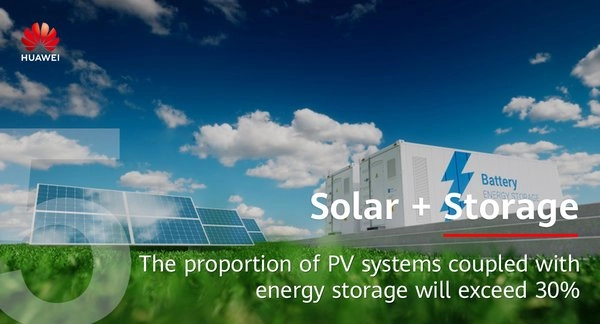
Key Point: More than 30% of solar energy systems will be paired with energy storage solutions.
Future power system regulations will become increasingly stringent to ensure grid stability and effectively manage peak electricity demand.
This trend, combined with declining battery costs, means that **energy storage systems** are set to become a key component integrated with solar installations. It is therefore projected that by 2025, more than 30% of newly installed solar systems will include battery storage, helping to enhance grid reliability and improve overall system value.
Trend 6: Virtual Power Plants
Key Point: Over 80% of residential systems will be connected to Virtual Power Plant (VPP) networks.
Over the next five years, small-scale solar power systems distributed across homes and factories will be interconnected through technologies such as 5G, cloud computing, and blockchain.
This connectivity will enable the creation of what is known as a **Virtual Power Plant (VPP)** — a centralized control system capable of managing numerous small power sources as if they were a single large power plant.
The role of a VPP is to optimize electricity generation and distribution, create new services within the energy system, and most importantly, open up business opportunities for new players to help drive continued growth in the solar energy industry.
Trend 7: Operational Safety
Key Point: Arc Fault Circuit Interrupter (AFCI) technology will become a mandatory feature in rooftop solar power distribution systems and will evolve into an international industry standard.
The more widely adopted solar energy becomes, the greater the emphasis must be on the safety of buildings and users. In particular, the risk of **“electric arc faults”** (sparks within the electrical system) — often caused by damaged equipment or aging wiring — is a leading cause of fires.
Therefore, **AFCI (Arc Fault Circuit Interrupter)** technology, an intelligent protection system capable of detecting and immediately stopping arc faults, is set to become an essential standard feature for rooftop solar installations. In the near future, AFCI is expected to evolve into a global safety standard for the solar industry.
Trend 8: Higher Energy Density
Key Point: The energy density of inverters will increase by more than 50%.
A key trend today is reducing energy costs, which is driving solar panels to achieve higher power output. At the same time, there is growing demand for inverters that are easier to maintain.
To meet these goals, **inverters** must achieve higher **energy density** — meaning they become more compact in size while being capable of handling greater power capacity.
This advancement is made possible by next-generation semiconductor materials such as SiC (Silicon Carbide) and GaN (Gallium Nitride), combined with more intelligent control systems.
As a result, it is projected that over the next five years, inverter performance will improve by more than 50%.
Trend 9: Modular Design
Key Point: Core components such as inverters, PCS (Power Conversion Systems), and energy storage units will be designed with a modular architecture, allowing them to be separated and configured independently.
As solar power plants become larger and more complex, the cost of maintenance by specialists also increases. A growing trend is **modular design**, which allows key components such as inverters and energy storage systems to be easily removed, replaced, or expanded — similar to a plug-and-play approach.
The advantage is that specialized expertise is not always required for maintenance; faulty modules can simply be replaced. In addition, the system capacity can be expanded smoothly in the future.
This approach significantly reduces operation and maintenance (O&M) costs while improving overall system flexibility.
Trend 10: Safety and Reliability

Key Point: Safety and reliability have become essential requirements for solar power plants.
As solar power plants around the world become increasingly connected to the internet and more complex, **cybersecurity** has emerged as a critical issue.
This security has two key dimensions:
1. **Plant security** — protecting facilities from cyberattacks, and
2. **Data privacy** — ensuring that user data remains confidential.
As a result, future solar systems must be built with the highest levels of safety and reliability.
With this vision — and the rise of 5G, cloud computing, and AI technologies that are shaping a fully connected intelligent world — Huawei has introduced 10 key trends for the solar industry in 2025.
These trends serve as a roadmap for building a future where everyone can access clean energy that is both smart and secure.
Source:
https://www.greennetworkthailand.com/trends-พลังงานแสงอาทิตย์/